


The Interview
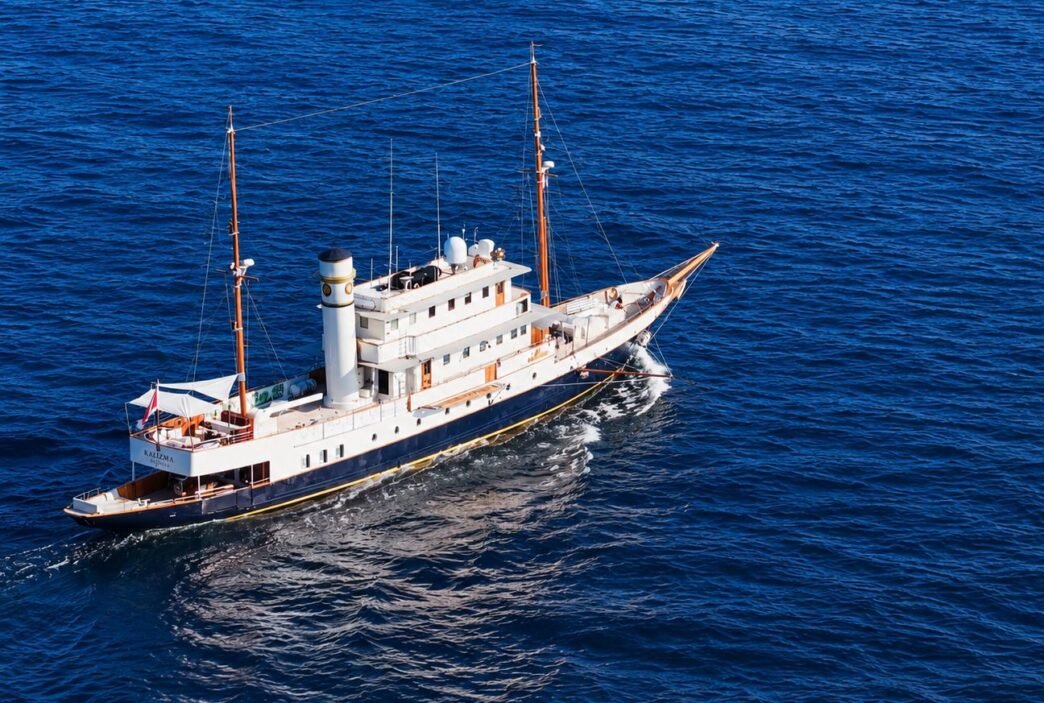
She was the refuge of Elizabeth Taylor and Richard Burton, survived two world wars, and hosted royalty at the America’s Cup. Today the Kalizma, the 1906 yacht, has a new custodian. Shirish Saraf, the man who remakes everything he owns, and who, faced with her, chose to change nothing.
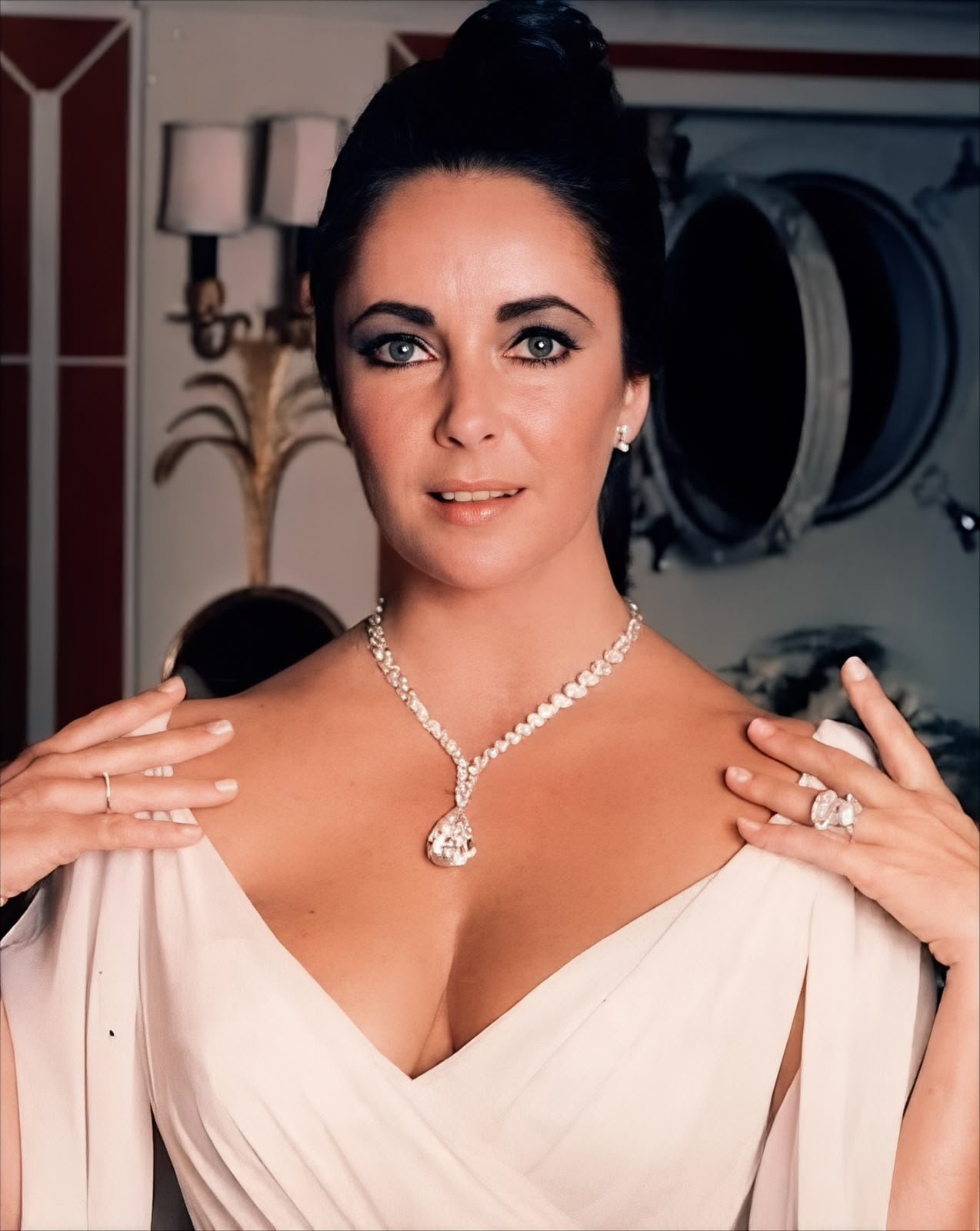
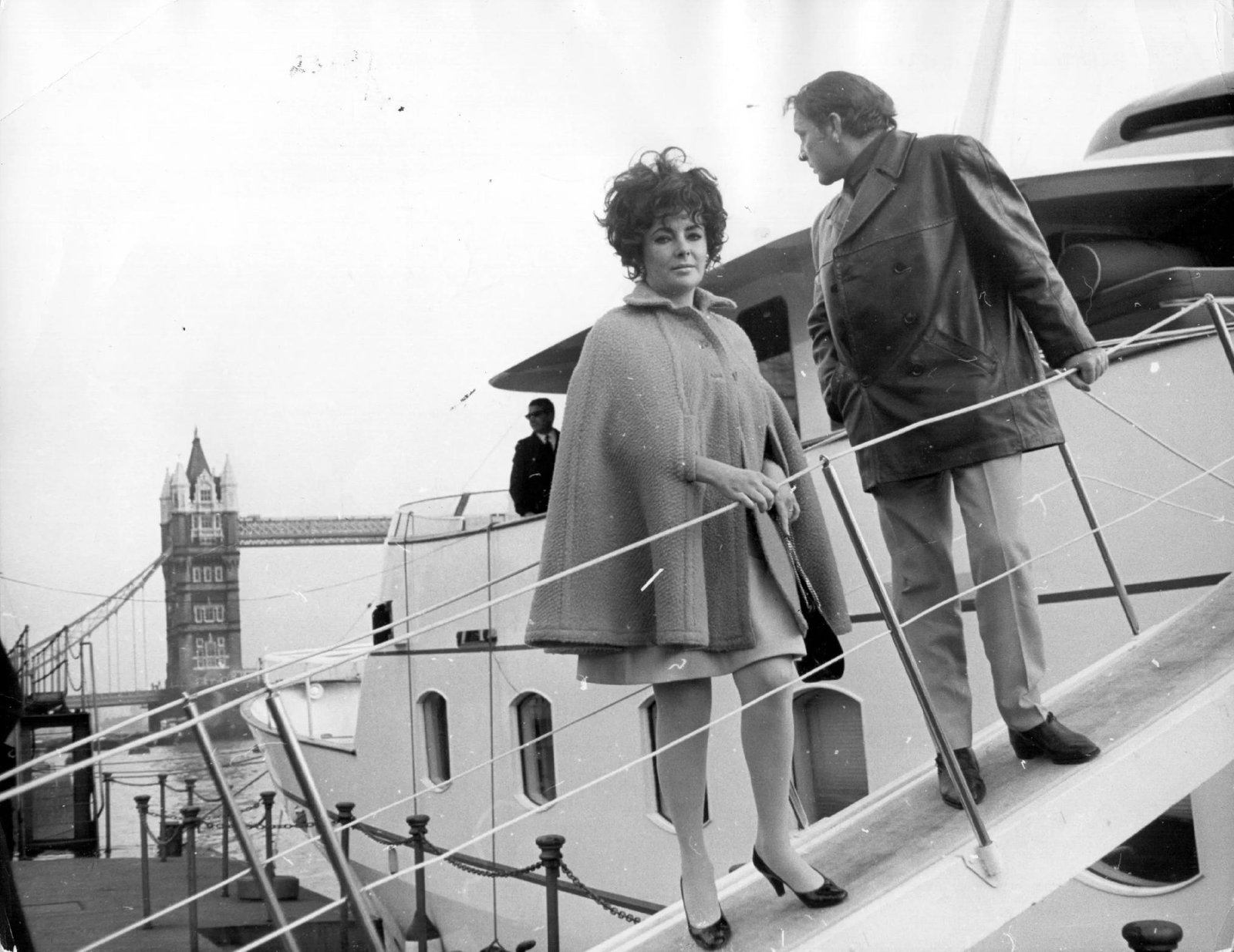
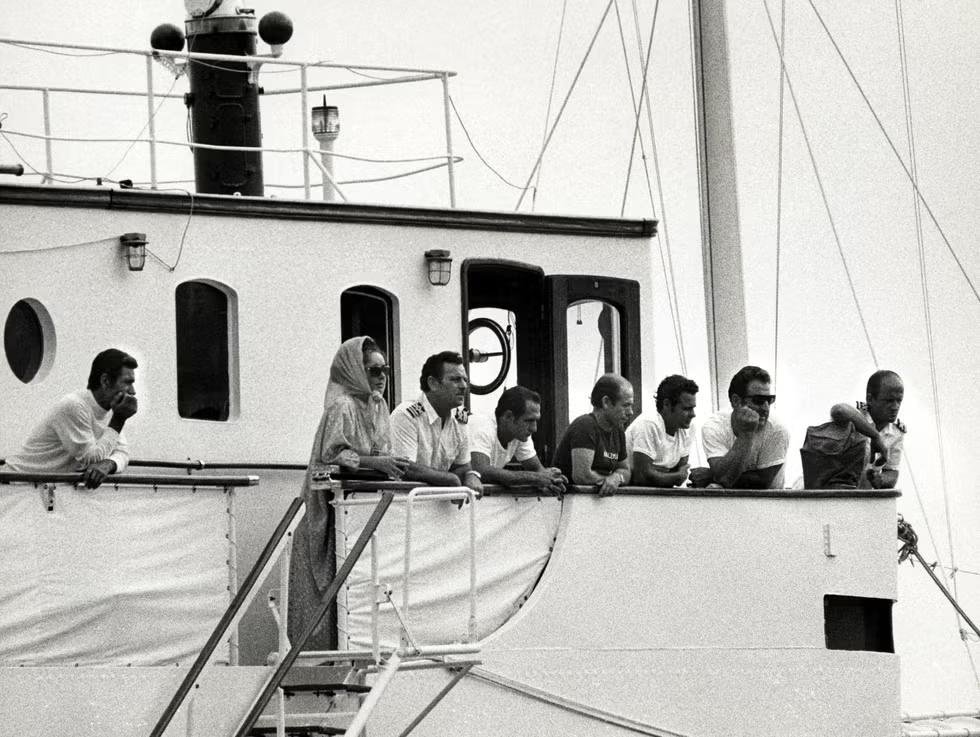
In 1967, Richard Burton bought a yacht for Elizabeth Taylor. They chartered her first, on a Mediterranean cruise, fell in love, and Burton bought her, signing as Richard Taylor to give the paparazzi what they wanted. He renamed her from the initials of three daughters, Kate, Liza, Maria: Kalizma. Aboard her, far from the cameras, the most watched couple in the world found the one address no one could reach. It was on this deck that Taylor received, from a courier’s hands, the 69.42-carat Cartier diamond, bought in 1969, to wear in Monaco at Princess Grace’s ball.
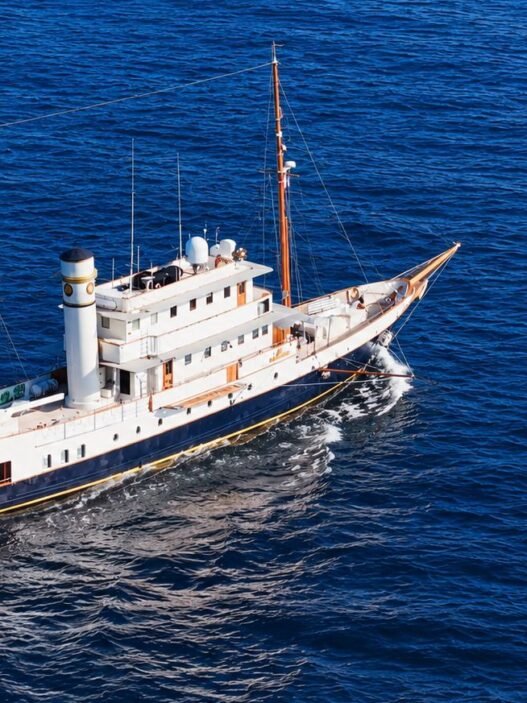
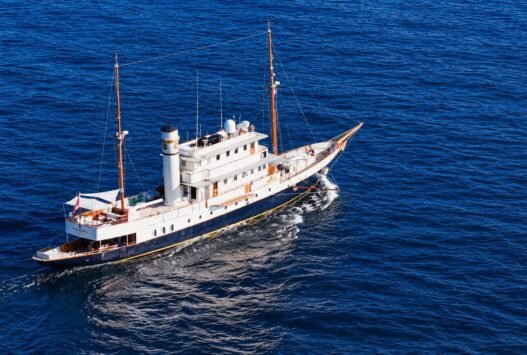
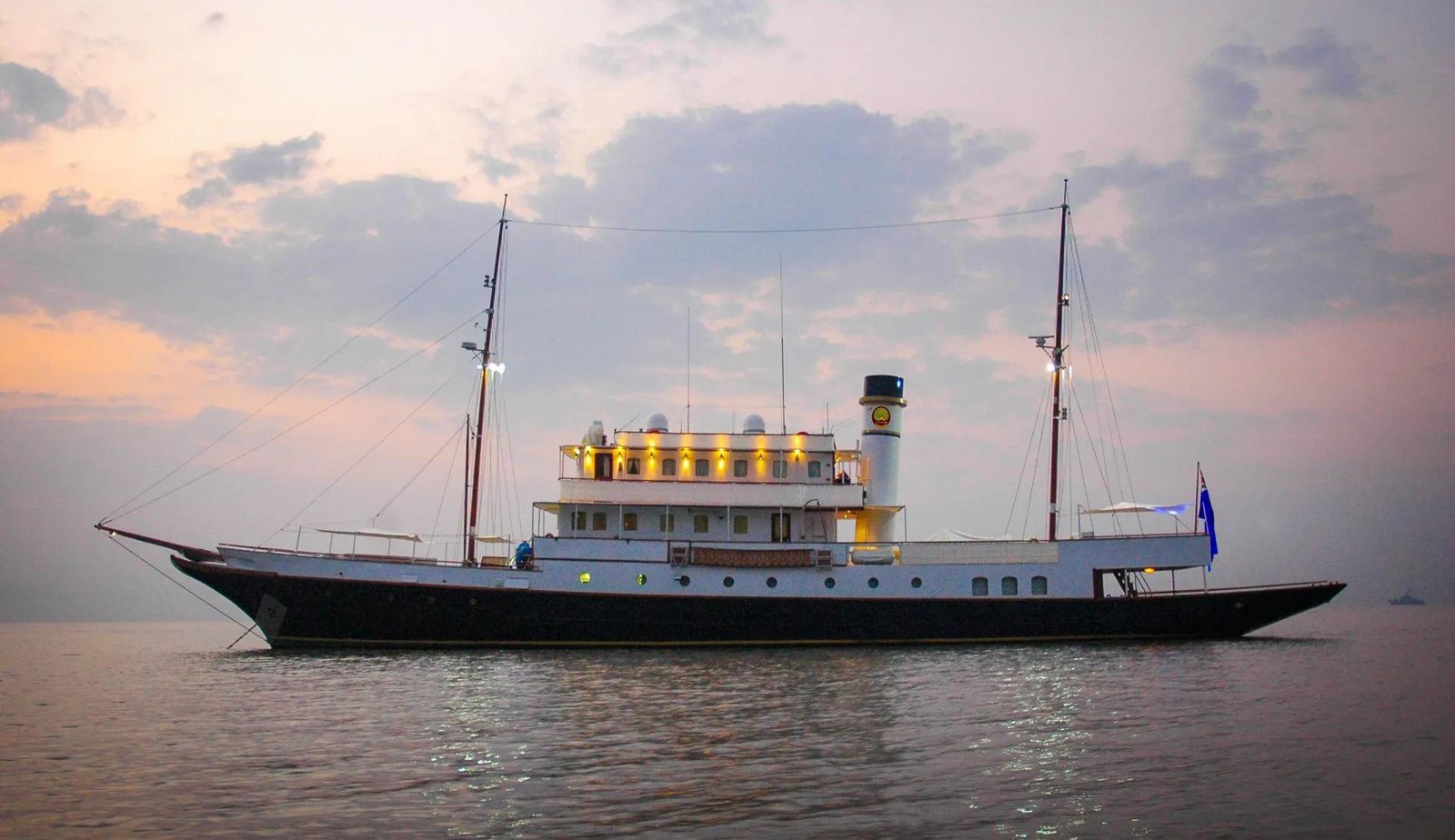
But the Kalizma was already a legend long before Hollywood. She was born in 1906 as the Minona, designed by G.L. Watson and built by the Scottish yard Ramage & Ferguson at the height of the golden age of sail. She survived two world wars, serving in both. In 1983, she was a floating box at the America’s Cup, with royalty aboard. She has passed through many owners in more than a century. And she is still here.
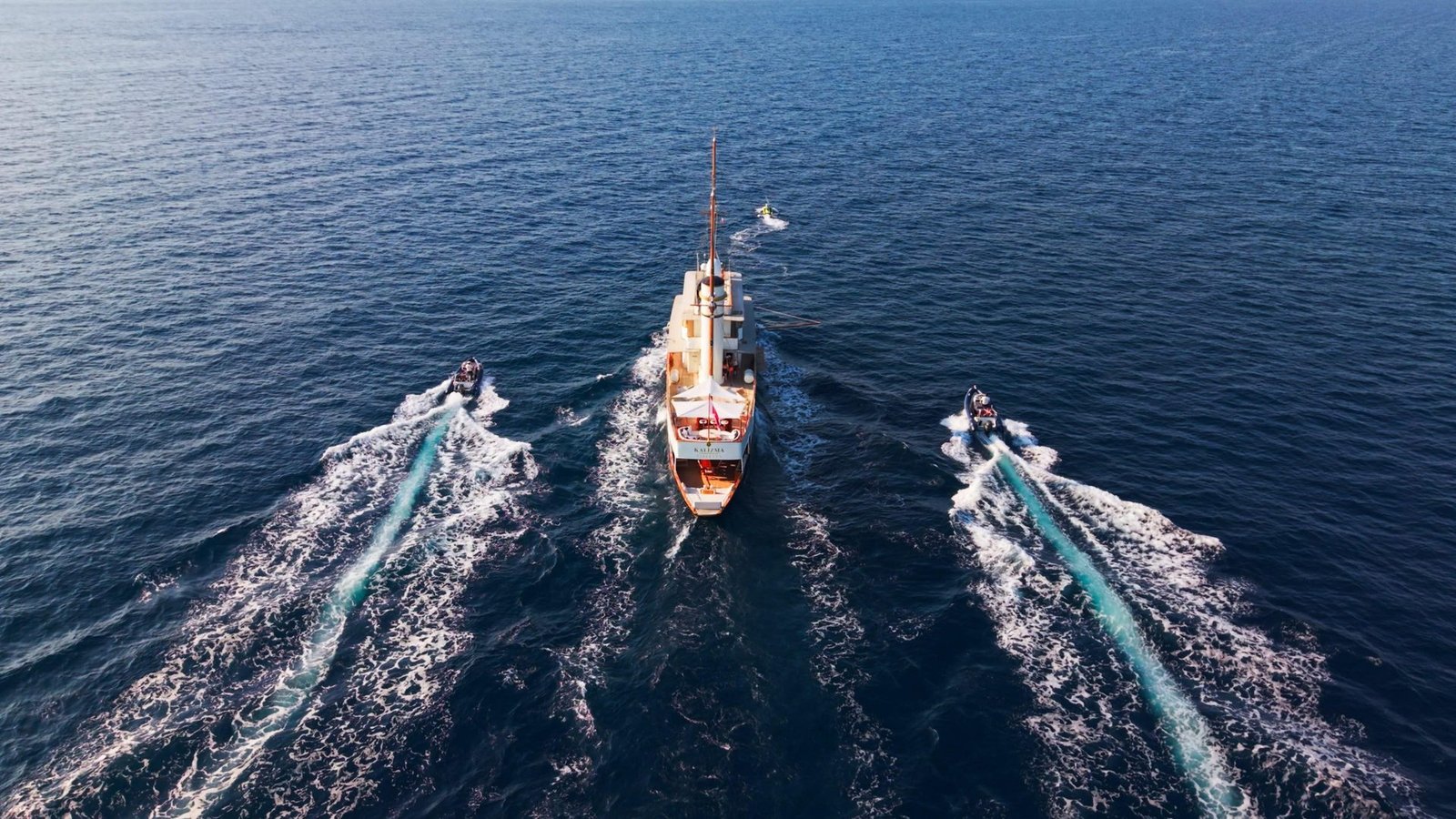
I boarded her at the invitation of Shirish Saraf, the man who keeps her now, for a voyage along the coast of Montenegro. From Tivat to the Venetian walls of Kotor, through the Boka Bay, the Adriatic fjord where mountains fall into the water and the sea becomes a lake. A passage like that is long enough to watch a man inside his own house, which is where people stop introducing themselves and begin, simply, to be. And there is a coincidence he enjoys more than he admits: in the same year the ship became the Kalizma, 1967, Saraf was born on the other side of the world.
He receives you without ceremony, which is itself a kind of ceremony. He sits on the aft deck, rose-tinted glasses against the late light, and lets the ship speak first. “She carries a soul that is different, and an energy that is different,” he says. “And we all feel that energy as we step in.” There is a word he uses almost without noticing the weight it carries. Custodian. Someone who holds a thing for a while, knowing it will continue without him. The word does not describe only his relationship with a yacht. It describes the way he has decided to live, and that it was handed to him, many years earlier, by someone else.
Chapter I
What his father said in Dubai
The family has roots in Kashmir, in the mountains. He grew up in Oman, was educated in England, and now divides his life between Dubai, Hong Kong and India, though he calls London home. The sea, in childhood, was a rumour. “I come from Kashmir, from the mountains,” he says. “The sea was alien to me.”
The first encounter with the Kalizma happened in Dubai, where she lay moored, and he was not alone. He went aboard with his father. And it was his father who, standing on that deck, told him this was a yacht to be treasured. It was his father, too, who gave him the only description of her that Saraf still repeats: the Orient Express of the seas. A father taking a son aboard an object from another century and saying, in effect, that this is not a thing you buy. It is a thing you keep.
At the time, the distance between him and the ship was not measured in money. It was measured in imagination. “When I saw her in 1995 in Dubai, I was a banker earning two thousand dollars,” he says, without vanity. “Would I ever have imagined that thirty years later I would be sitting on Elizabeth Taylor, Richard Burton and their yacht? I couldn’t even dream of a day’s expenses to keep her, even if I were given her for free.”
What came next is familiar to anyone who follows finance in Asia. Saraf co-founded Abraaj Capital, which grew to manage more than six billion dollars, and in 2008 founded his own firm, Samena Capital. It is the résumé of a man accustomed to buying, restructuring and transforming. In 2019, he bought the Kalizma. Twenty-four years after standing on that deck beside his father, he did what he had been told to do.
Chapter II
The shirt you wear
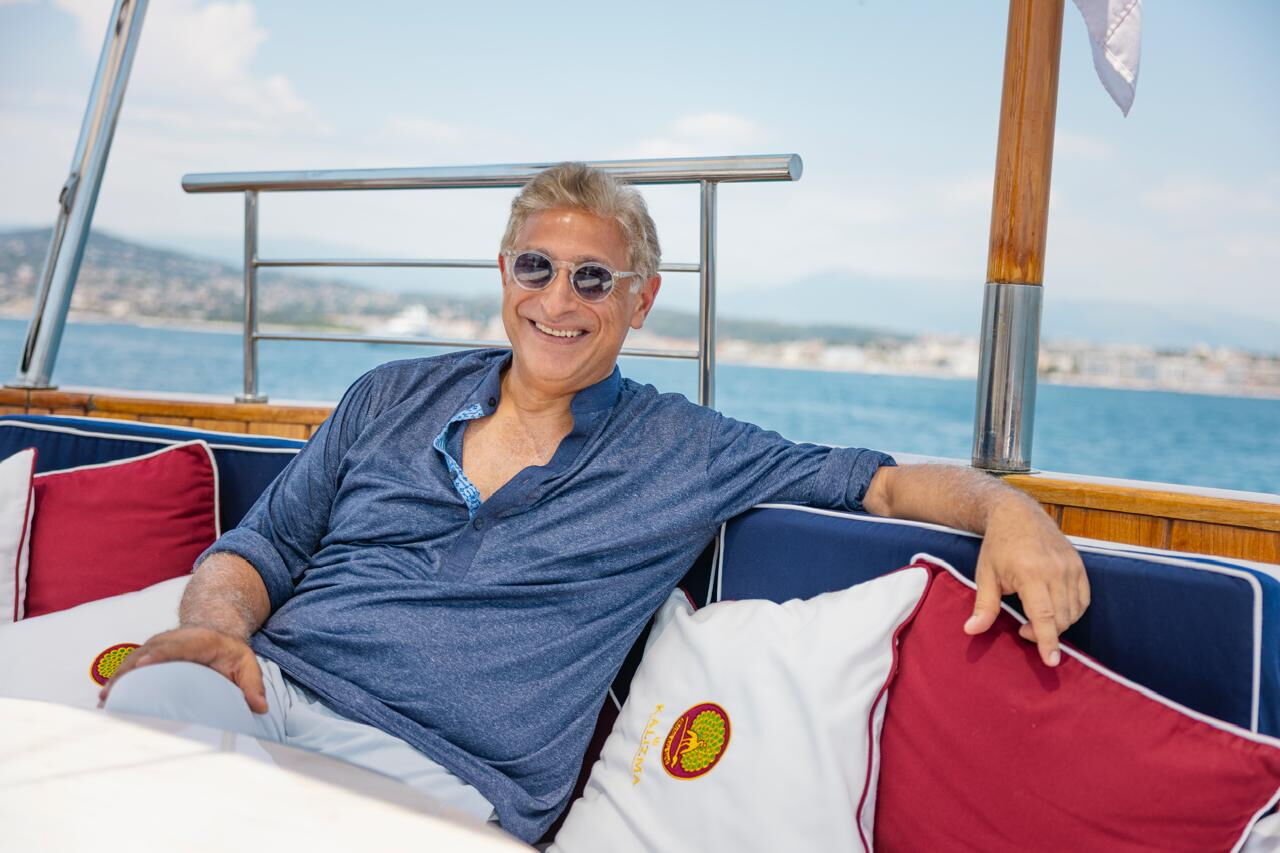
Ask him why this vessel and not another, and the answer arrives as an image. “Every vessel is a shirt you wear. The vessel has to suit the owner.” A metaphor from a man who could have any garment made to any measurement. The Kalizma is the one he chose not to alter, the one around which he decided to reshape himself instead. And the metaphor becomes a confession: “I feel it like home.”
During the pandemic, the Kalizma was exactly that: the refuge where he withdrew with his family. There were months between the Maldives, Sri Lanka and Goa, his father, his mother and Aria, his daughter, all aboard, three generations at once. He sums up those days in a single word: magical.
His father’s health was already frail. Even so, last summer, with the Kalizma restored, he made a point of coming aboard one last time, in the south of France, and spent a month on the ship he had told his son to keep, thirty years earlier, on a deck in Dubai. He passed away in April, shortly after the two of them had returned together to Kashmir, the family’s homeland. For five years he saw the Kalizma sail. He lived to see his son do exactly what he had asked: not to buy a legend, but to preserve it.
There is a line, delivered almost laughing, that captures the whole inversion. It was not he who sustained the ambition for the Kalizma; it was she who sustained his. “She made me want to earn more.”
He is candid about what she is not. “Today’s boats are wider. On a fifty-metre yacht you will have more space, higher ceilings, more luxurious rooms,” he admits. “But what you will not have is the magic of the upper deck, or the warmth of the salon, nor the history that comes with it.” It is the entire case for her, made by the man least inclined to praise her.
“Understated elegance. In an age when everything feels so temporary and so short-term, this is so long-term.”
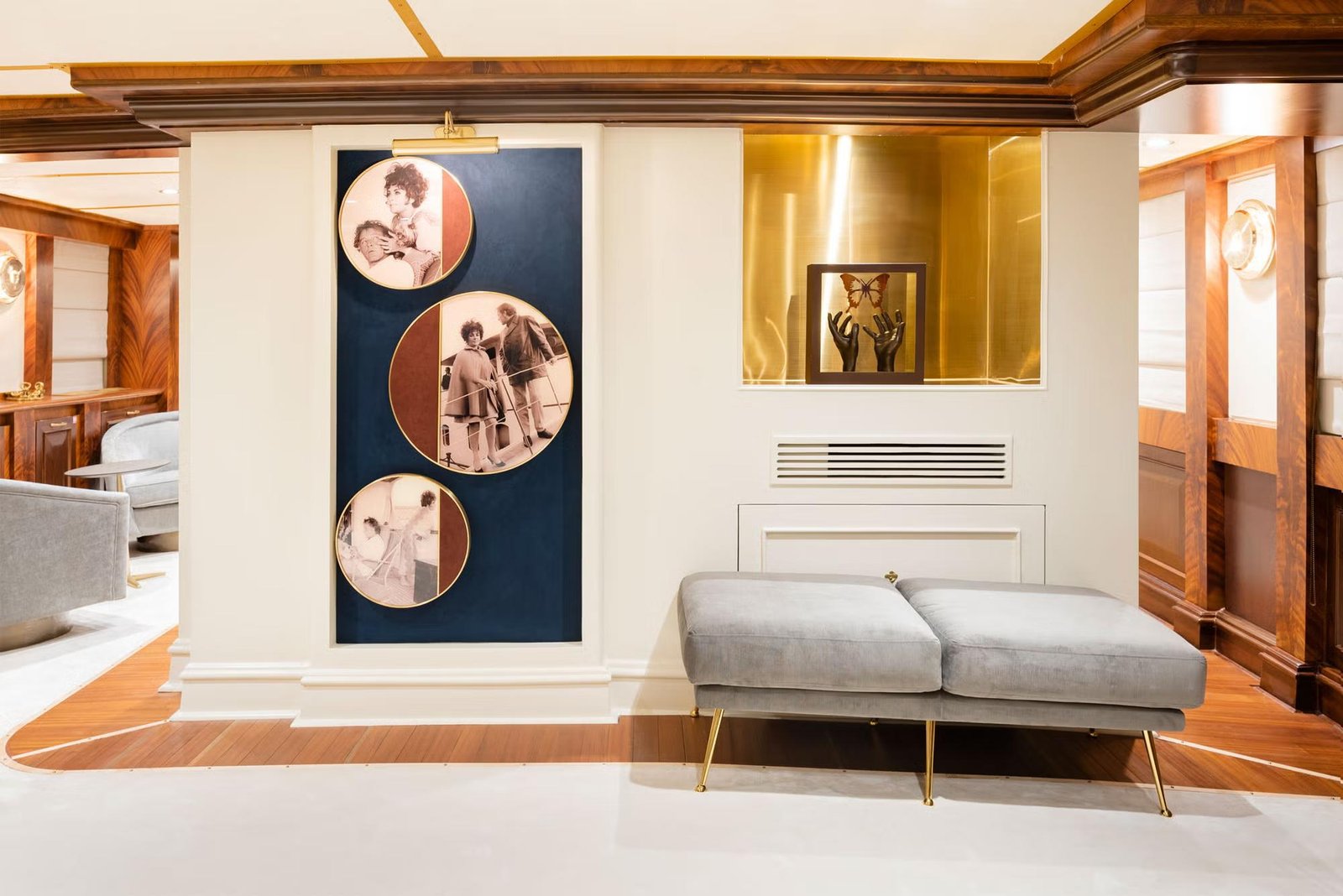
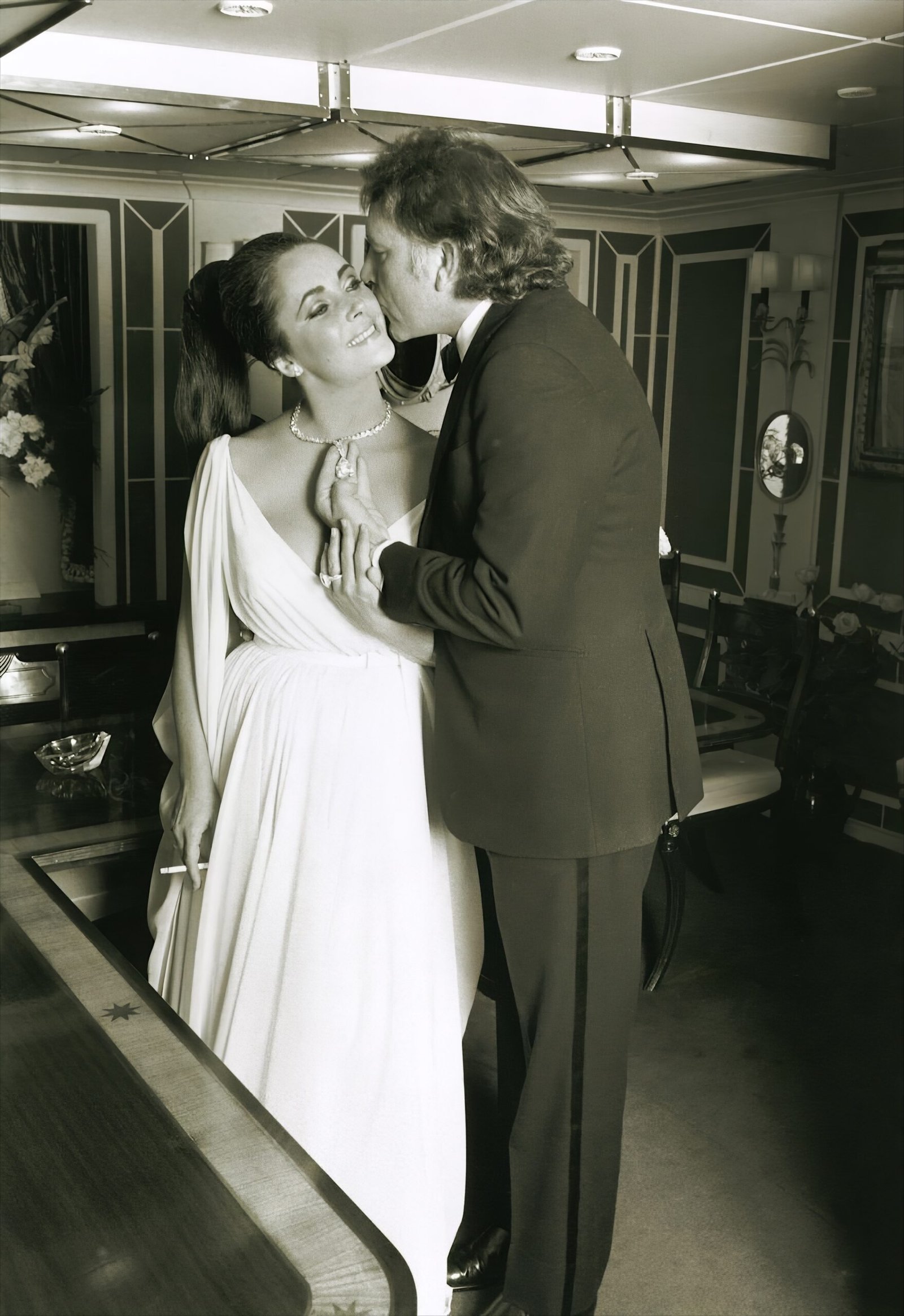
Restoration is where his philosophy becomes a practical decision. He improves everything he owns; it is the reflex of a career. With the Kalizma, the reflex stopped at an exact point: his intent, going into the work, was that nothing should alter the soul of the ship. Across 2019 and 2020 the finest craftsmen worked on her with the finest materials. The wood, the brass, the proportions of 1906 were preserved with something close to stubbornness, while contemporary comfort went in underneath, invisible. In 2022 the result took the Judges’ Special Award at the World Superyacht Awards. To walk the decks with him is to notice how little he touches. He is not showing you his work. He is showing you hers.
Chapter III
The arithmetic of survival
None of this would carry weight if the Kalizma were merely old. Old is common; surviving is not. She has spent more than a century in what Saraf calls, without exaggeration, the most corrosive substance in the world, and she is still here.
“The sea is the most corrosive substance in the world, where even steel does not survive. For a yacht that has survived 120 years at sea, it is like one human left in a world of seven billion.”
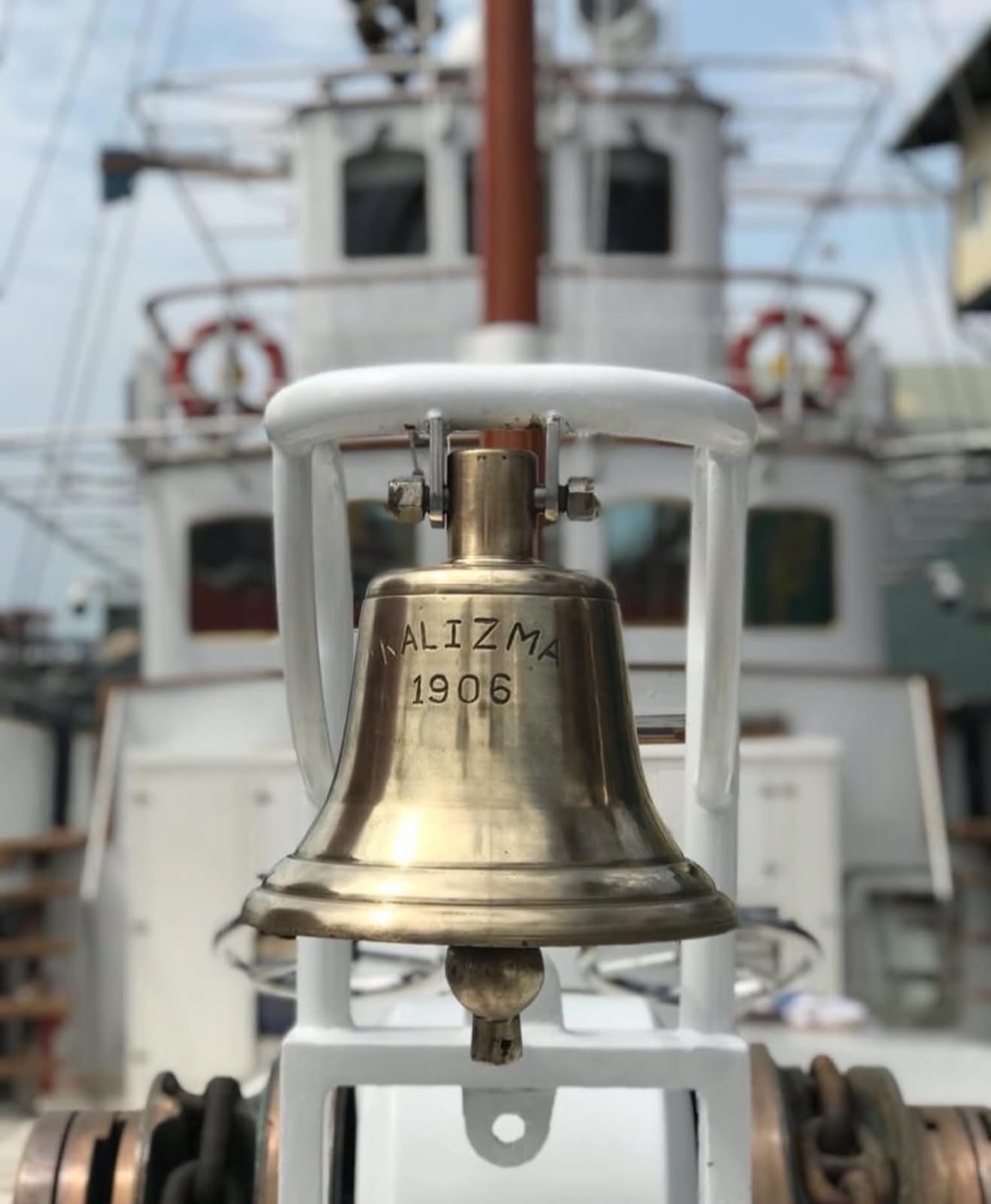
And the sea, in her case, was not even the worst of her enemies. In the First World War, she was requisitioned by the British Royal Navy and served in the Auxiliary Patrol fleet, from 1914 to 1920. She was armed. The record left by Sir Archibald Hurd documents the Minona going to the rescue of four steamers under attack from a German U-boat. A pleasure yacht facing down a submarine in the Atlantic. In the second, she served again, from 1939 to 1945, now as H.M.S. Minona, base ship for the Deep Sea Rescue Service at Campbeltown. Her commanding officer, Lt Commander R.D. Robinson, went so far as to christen his own daughter to her bells. The same brass that still sits on deck today, half a metre from where we took coffee in the mornings.
She is six years older than the Titanic, and was born of the same world: the same British shipbuilding industry, the same decade that believed steel would defeat the sea. She was, in fact, among the first steam vessels to carry electric light. The Titanic disproved that era’s promise, and disproved it in four days. The Kalizma is about to turn 120. Two ships of the same promise, and the ocean kept one.
That is the figure worth keeping. Not the fame, not the stones, the survival. She did not give in, not to the sea and not under fire. When it is suggested that comparable ships exist, he corrects you with the patience of a man who has answered this before: “There is no other Kalizma. She carries a value that comes from 1906.”
Timeline
Four names, two wars, one hundred and twenty years
Launched · Leith, Scotland
Christened Minona. Designed by G.L. Watson, built by Ramage & Ferguson, for a vice commodore of the Royal Eastern Yacht Club. Among the first steam vessels to carry electric light.
First World War
Requisitioned by the Royal Navy. Armed, she serves in the Auxiliary Patrol fleet until 1920. Documented going to the rescue of four steamers under U-boat attack.
Second World War
Serves as H.M.S. Minona until 1945, base ship for the Deep Sea Rescue Service at Campbeltown. Her commander christens his own daughter to the ship’s bells.
Years of peace
Back to civilian life. Renamed Cortynia, then Odysseia. Between 1954 and 1955, her steam engine gives way to diesel.
Burton and Taylor
Richard Burton buys her for Elizabeth Taylor and renames her Kalizma, from the initials of Kate, Liza and Maria. Aboard, in 1969, Taylor receives the 69-carat Cartier diamond.
America’s Cup
Under Peter de Savary, then her owner, the Kalizma serves as a floating box at the regatta, hosting Prince Philip aboard.
Shirish Saraf
Acquired at auction in Sri Lanka, in poor condition. Restored across 2019 and 2020 under one rule: nothing must alter the soul of the ship.
World Superyacht Awards
Wins the Judges’ Special Award and is nominated best rebuilt superyacht of the year.
Today · Montenegro
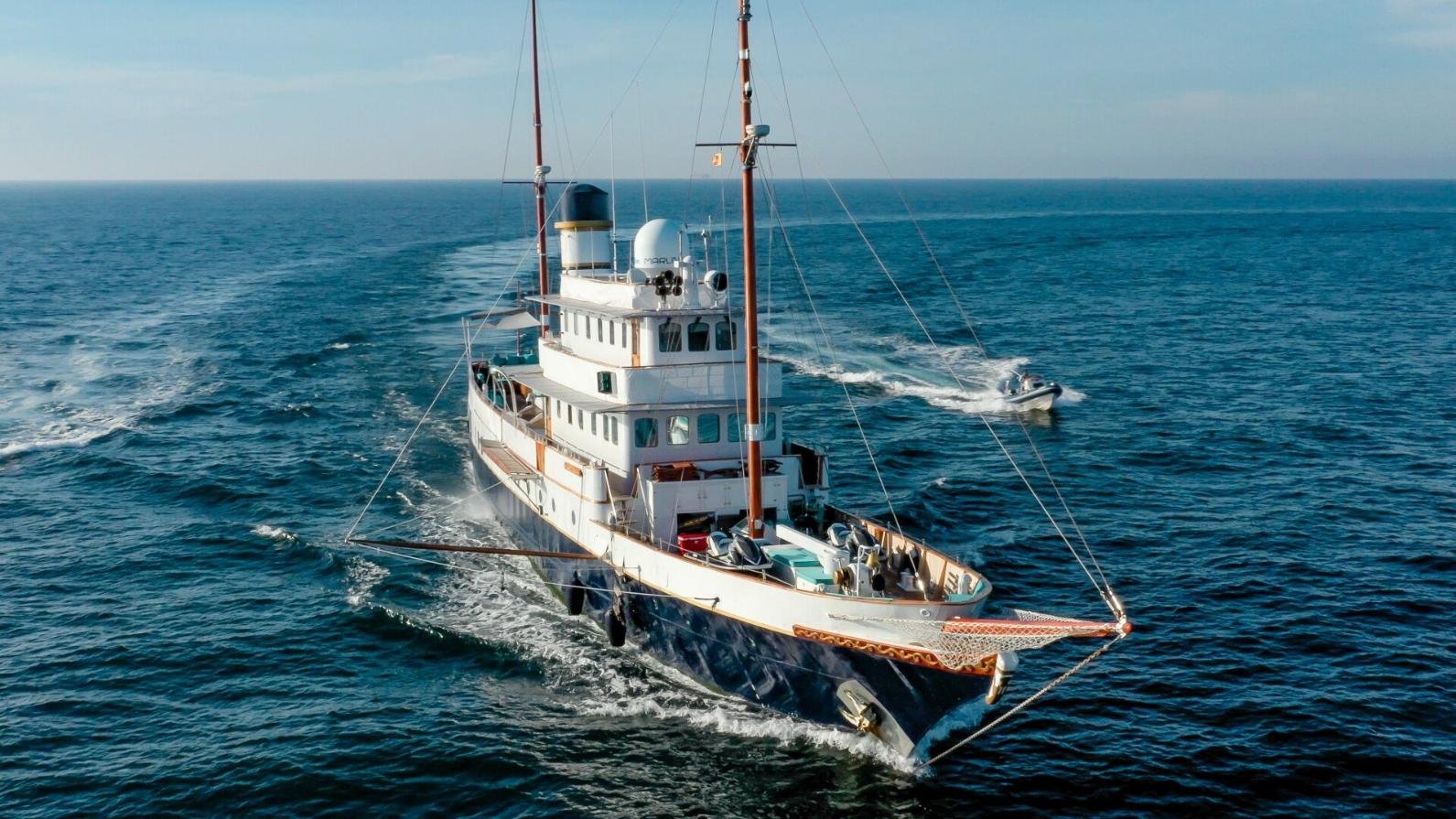
One hundred and twenty years after her launch, the Kalizma sails on. The soul, as always, goes with her.
Chapter IV
The man who writes
Late in the afternoon, he does something nobody expects. He recites a poem from memory. It is Kipling, the lines about meeting with triumph and disaster and treating those two impostors just the same. He does not announce it, does not ask permission. He simply says it, and concludes: “That is the soul of the Kalizma.”
It is not an accident. Saraf has a deep interest in literature and has been writing a novel in verse. It explains where his language comes from. A man who describes a boat as a shirt, ownership as custodianship, and the sea as the most patient enemy in the world, is a man who spends his free hours looking for the right words. It makes sense that he loves a poem about equanimity: he has crossed both sides of fortune and concluded that neither deserves excessive trust.
It is no coincidence that a man who writes verse is also the one who decided not to touch the 1906 lines. Both come from the same place: the suspicion that certain forms are better than any improvement one might make to them.
Chapter V
What he keeps for others
Here the word custodian stops being about the ship. In 2015, Saraf endowed a scholarship at Charterhouse, the English school where he was educated, for a child from India. The following year he founded the Samena Foundation, directed at children without means, which supports the Phaya Taung monastery in Myanmar, home to a thousand orphans. He served on the board of the Little Dreams Foundation, created by Orianne and Phil Collins. And there is Go Dharmic, with which he distributed food across India during the pandemic. Asked about it, he deflected the credit: “We did food distribution together in India during COVID: over a million meals. And it’s just incredible, the scale, the logistics, the passion, the commitment, the sincerity with which he does it.”
He was asked about his own part, and he answered by describing someone else’s work. A million meals arrives in passing, like a logistical detail. It is the same movement he makes on deck when the Kalizma comes up: he steps out of the way, and lets the thing appear. A scholarship he will not use. A monastery he will not inhabit. A ship he insists he will not own forever. Shirish Saraf has built a life standing between things and their futures. He learned it, perhaps, on a deck in Dubai, with his father beside him.
Chapter VI
The refusal
There comes a moment when you ask him, directly, whether he owns the Kalizma. And here is the heart of it, because he refuses the question. “How can I say that I will always own the Kalizma? History tells you she has found many owners, and over time you have been nothing more than the custodian of the Kalizma, while she carries on her own journey.”
He reaches for a watch to explain, because the watch is the object we most easily forgive for outliving us. The comparison, from a man whose instinct is to remake everything he touches, is not modesty. It is a concession.
“You never really own a Patek Philippe. You just leave it for the next generation. I don’t want to have the ego to think I will own her for life. She will find her new owner when the right time comes.”
There is a kind of premium that is loud and fast and gone by the following season. And there is this one, the privilege of time that refuses to hurry. Saraf arrived, late and by an improbable route, at the second kind. It is the harder of the two, because it requires the owner to accept that he is the passenger.
· · ·
Chapter VII
Life aboard
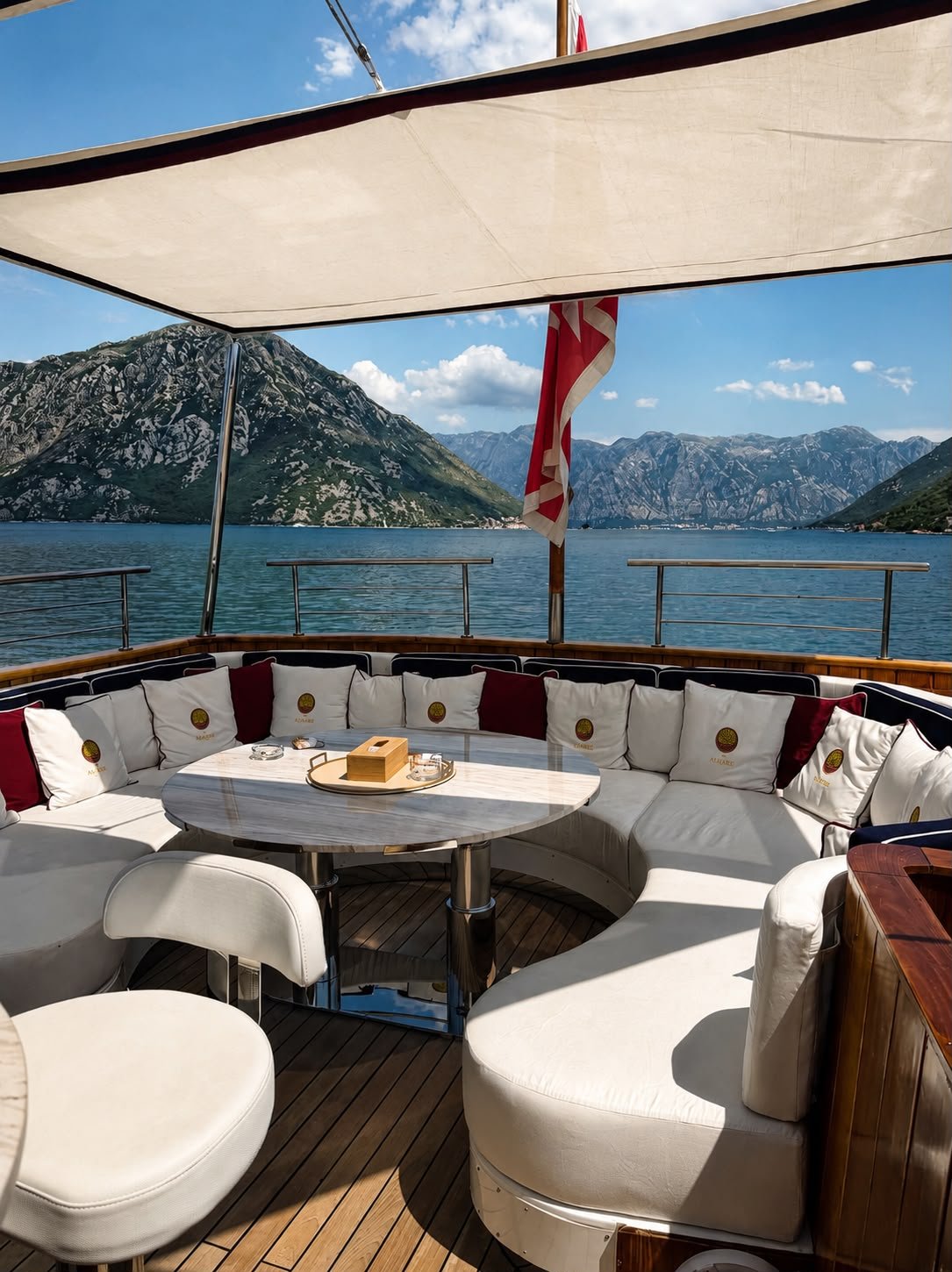
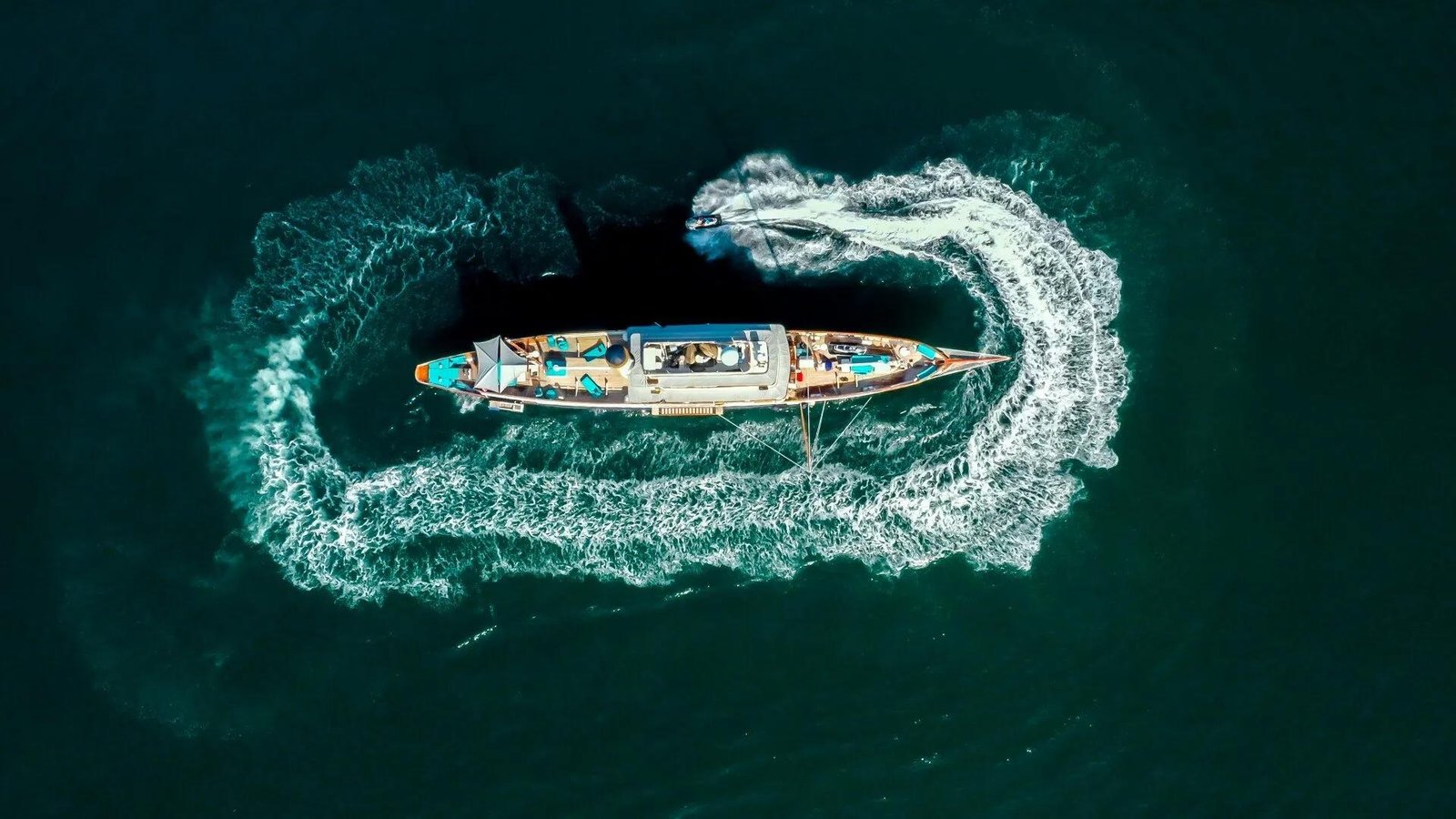
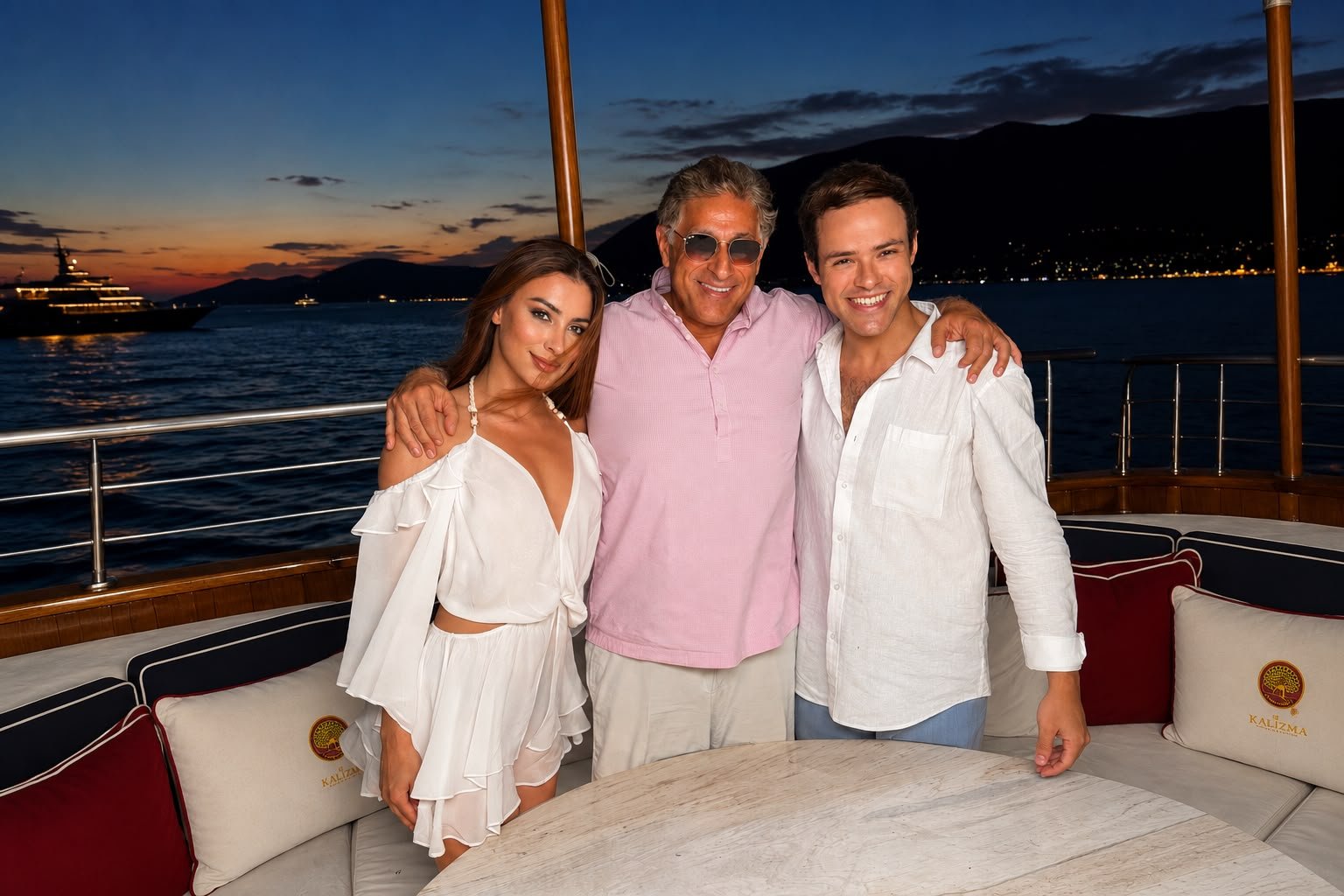
Not everything, of course, is philosophy. The Kalizma is also a house that moves. The routine has the quiet precision of a well-governed household: coffee served on deck while the bay is still smooth as glass, afternoons when the ship glides between the Venetian walls of Kotor and the mountains that close the horizon like an amphitheatre. At no point did the ship feel like an object of display. She felt like what Saraf insists she is: an old house, extraordinarily well kept, that happens to float.
He speaks of recent crossings the way one describes the seasons: Amalfi, France, Sri Lanka, and Turkey, of which he is especially fond, from the warmer waters at Kaş and Kalkan to the Roman ruins one can reach from the deck. He speaks of his daughter, Aria, who sings and rides, with the disarmed pride of any father. The things he keeps, he keeps for someone. The next generation is not a rhetorical abstraction in his mouth. It has a name. Asked about occasions aboard, he offers, unprompted, an idea he formulates himself: that Cartier might one day meet the Kalizma again, since the maison’s stone once rested on these very decks.
The Vessel
Design G.L. Watson · Yard Ramage & Ferguson
Minona · Cortynia · Odysseia · Kalizma
Chapter VIII
The soul, and what remains
As the light drops and the blue takes the place of the gold, the conversation changes register. Saraf, who is Hindu, offers an image that captures, better than any other, his relationship with the ship. “In Hinduism, we say the soul lives on and the vessel dies. In this case, the vessel has lived on, and the soul goes with her.”
He is not her improver. He is her witness. The man who remakes everything has finally found the thing that remade him. And he describes her as one would describe a person, because at some point she stopped being describable any other way.
“A very elegant old lady, refined in taste, who has seen a lot come and go, like life, and has met many triumphs and many disasters along the way.”
The legends who owned her are gone. The captains who took her to war are gone. And the father who took him aboard in Dubai, and who lived to see her restored, is gone too. He himself will go one day, and says so without hesitation. The ship, as always, remains.
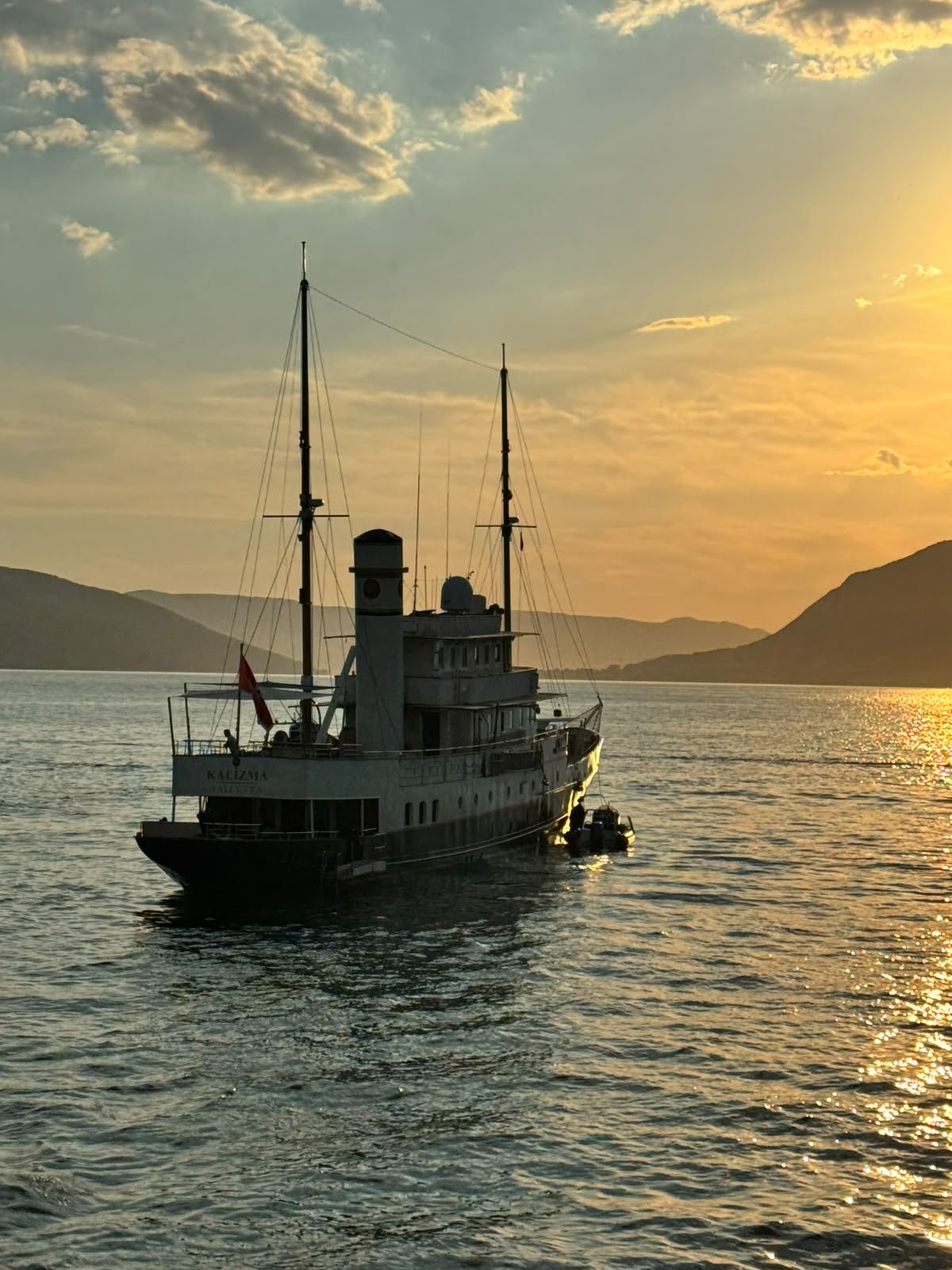
At the end of the voyage, I stepped off the Kalizma at Tivat with the opposite feeling to the one I arrived with. You board her thinking of Burton, of Taylor, of the diamonds, of the century. You leave thinking of the man who keeps her now, and of his father, who thirty years earlier stood on a deck in Dubai and told his son that this was a thing to be kept. A yacht built in 1906, and a man who, holding the power to change anything, spent a lifetime discovering what should not be changed. She carries a different soul, he says, and everyone feels that energy as they step aboard. It is impossible to disagree. It is more impossible still not to notice that the sentence describes him too.
·
Gabriel Silveirado boarded the Kalizma at the invitation of Shirish Saraf, on a voyage along the coast of Montenegro, between Tivat, Kotor and the Boka Bay. Interview conducted with Amanda Ford, for WAYFARER. Photography by Anna Sereda.